

WOW … ANOTHER INCREDIBLE YEAR! One year ago, I knew that I needed to find a new location for my office and I feared having to compromise on my needs and wishes. I drove up and down Route 19 checking out various types of office settings, from deserted shared office space to house basements converted […]
You are browsing archives for
Tag: limited range of motion
Another step toward pain free living

Within my orthopedic manual therapy practice, I have found that when we become aware of and take responsibility for how we carry our bodies, we begin to heal naturally and our pain melts away. The teachings of Paul Kelly resonate with me because of his focus on postural awareness and the brain-body connection. My […]
Pain in the Neck
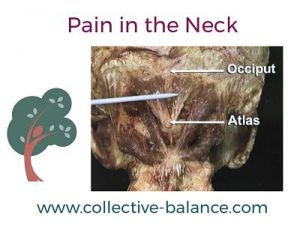
As you can see from this picture, the occipital muscles run in multiple directions allowing the head to have that bobble-head movement. Symptoms caused by neck dysfunction can express themselves as a combination of headaches, dizziness, pain, or limited range of motion. Several recent clients expressed similar symptoms, each one slightly different from […]
Lateral Hip Pain
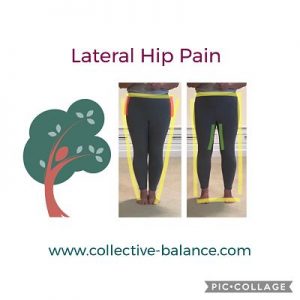
Many female clients come to me who experience Lateral Hip Pain. I take note to see that they tend to stand and sit with their legs glued together (sitting “like a lady” as we were all taught) in a reverse triangle position. I also note their tendency toward wider hips which are essential in […]
Postural Imbalances of the Pelvis
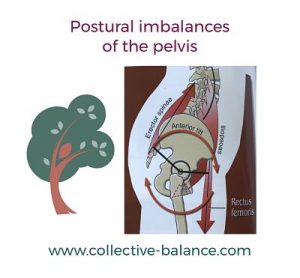
Pain is an indication that your body wants you to change your postural patterns. Many times I find that clients have a pelvis that is not balanced. This imbalance could be the source of not only their low back into hip pain, but also neck into shoulder pain. It seems as though the […]
Could Your 4″ Heels Be Hazardous to Your
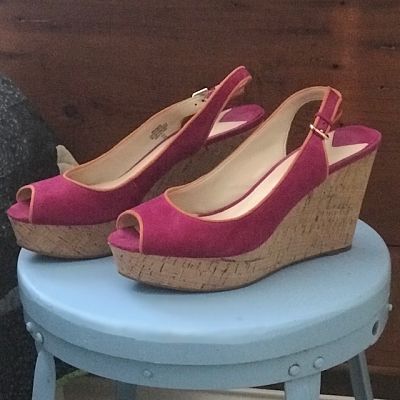
Have you ever thought about how effortlessly you walk across a room? Did you know that your body has to shift its center of gravity to one side while briefly balancing on one leg as it swings the other leg? This lateral shift happens with a combination of the shoulders and the hips. Two great […]